Be yourself; Everyone else is already taken.
— Oscar Wilde.
This is the first post on my new blog. I’m just getting this new blog going, so stay tuned for more. Subscribe below to get notified when I post new updates.
Be yourself; Everyone else is already taken.
— Oscar Wilde.
This is the first post on my new blog. I’m just getting this new blog going, so stay tuned for more. Subscribe below to get notified when I post new updates.

Lets take a look at the original social networking site launched by Google:
Orkut was launched in 2004 by Google and was named after is creator, Orkut Buyukkokten. Buyukkokten at the time was a Google employee and developed the social networking tool as a way to maintain friendships and meet new friends.
Orkut existed for only 10 years, but in that time became a market leader. In the first 4 months after its debut, Orkut had over 50,000 established communities and within 1 year the number rose drastically to 1,500,000 communities. Then in 2012 Orkut established its height of popularity with 30 million users.
The demise of Orkut came in September of 2014 when Google closed the service for good. The site never seemed to take off in the United States, but was incredibly popular in both Brazil and India. Despite all of the services successes, Orkut dealt with functionality problems with the website. Problems included blockages, limiting the number of friends and difficulties in loading and sharing photos. Ultimately, the service stopped meeting the cultural needs of the audience and was overtaken by other culturally appropriate cross-platform social media endeavors like Facebook.

Although the service was not available for a great deal of time, Orkut was able to successfully execute its marketing plan during its power run in the first 7 years.
The framework to a successful marketing action plan begins with 7 initial steps:
1) Goals 2) Target Audience 3) Social Media Choice 4) Resources 5) Policies 6) Monitoring 7) Activity Plan
Orkut’s original purpose or goal was for users to find communities through keyword search, including titles, description, and browsing through other users memberships. Users were interested in finding classmates and friends, by joining online schools, workplaces and residential street groups.
The target market for Orkut included technology workers and students. Due to Google’s strong reputation, Orkut carried a high prestige factor along with its invite-only membership list. Users were well connected in the technology realm supporting the networks initiative to market to technology workers and students.
Orkut supported its focus on community connection. The site offered a clean, simple and sophisticated interface making it easy for users to navigate and join communities. Brazil ranks as the fifth largest online market in the world suggesting the culture holds a high affinity for digital and social media, making it a strong market for Orkut.
So where did Orkut go wrong?

A major area where Orkut failed to produce was in evolution. As we take a look at popular social media platforms today, the thing that differentiates them is the way they evolve.
is arguably one of the most popular social platforms right now and the reason the service overtook Orkut was their ability to meet consumer needs and stay ahead of the curve. Facebook revolutionized social features, addressed user privacy and developed a great platform for advertisers.
To be successful, social platforms must allow users to blog, engage through social gaming and incorporate online video into marketing campaigns. Orkut became stagnant in these areas and was never able to re-establish their presence in the market. Categorically, Orkut failed in the areas of structure, strategic and market shift, failing to maintain pace with social sites like Facebook, Twitter, etc.
Although Orkut evidently failed, it taught us a great deal about how to utilize social networking sites for marketing purposes. It was also the first social network to gain mass popularity in both Brazil and India and set the course for todays social networking sites. Orkut has sense been forgotten, but should always be remembered for its role in establishing social networking services.
References:
Shreshtha, A. (2014, July 17). Why Orkut failed? Retrieved from Exchange 4 Media: https://www.exchange4media.com/digital-news/why-orkut-failed-56571.html
Singh, S. (2019, September 23). 7 Reasons Why Orkut Failed. Retrieved from Feed Dough: https://www.feedough.com/why-did-orkut-fail/
Tang, L. M. (2017). Strategic Social Media From Marketing to Social Change. Malden: John Wiley & Sons, Inc.
TechBiz. (2016, November 1). Why Orkut failed with the rise of facebook. Retrieved from YouTube.com: https://www.youtube.com/watch?v=1RUSyGuwU7A
Who is familiar with the messaging app Weixin……? My guess is not too many.

Here in the United States, consumers are encompassed with all forms of social media networks and applications such as Facebook, Twitter, Instagram and SnapChat. In China however, a company known as Tencent has developed a multi-purpose mobile app that is taking the world by storm.

Weixin is a Chinese multi-purpose messaging, social media and mobile payment app that is overtaking the world’s biggest smartphone market.
Check out the app here: Weixin
In its first 3 years, Weixin adopted 300 million users and this number is expected to continue to soar. This adoption rate was faster than both Facebook and Twitter, signifying the apps dominance in the world marketplace. Thanks to the mobile app, Tencent “is now worth $100 billion on the Hong Kong exchange.”
The success of the Chinese mobile app is due in large part to the marketing approach used by the company Tencent. The platform targets young, urban smartphone owners and aims to provide its audiences an “all-in-one” app. Users can do almost anything on Weixin, making the platform not only appealing, but convenient.
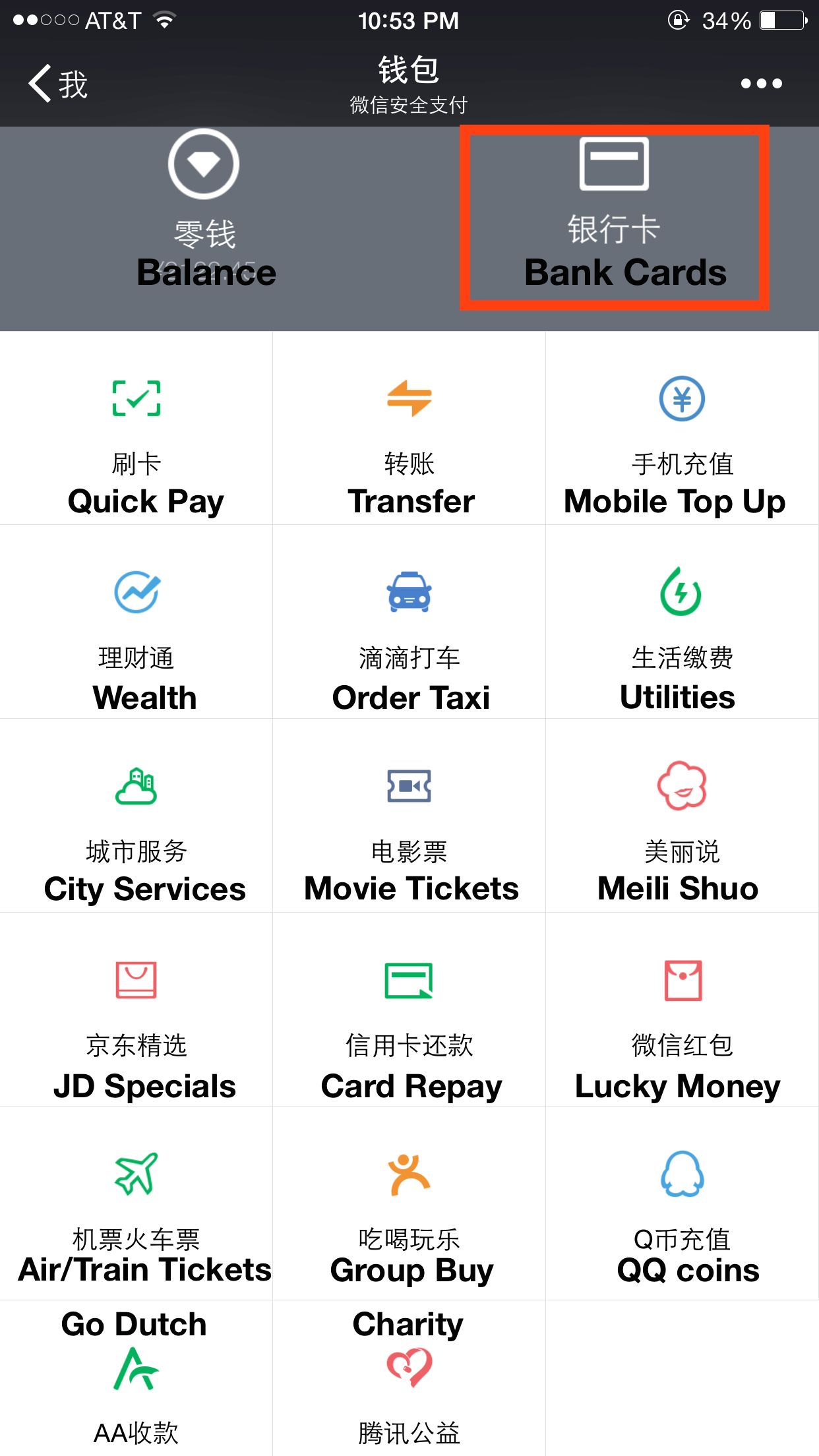
Tencent’s chief executive and co-founder, Ma Huateng — known in English as Pony Ma — said during a speech that the power of Weixin was that it was mobile, like a “portable organ” that unlike a PC was always with the user.
The “all-in-one” approach reduces search costs and simplifies the app. Consumers can get all they want from one platform, eliminating the need to find other options. This is a critical part to the success of Weixin.
Additionally, Weixin offers an interface thats is straightforward and convenient to its users. Users rarely need to leave the app to open a mobile browser, instilling a more convenient experience and stronger audience flow.
As audience needs change, Weixin has as well. The app introduces new functions and campaigns to satisfy the latest needs, trends and moods of its consumers. The “Red Envelope Campaign” is one of the ways Weixin created excitement and encouraged more time and spending through the social networking tool. Red Envelope is a traditional Chinese culture and Weixin allowed users to put a sum of cash in the Red Envelope and distribute the money randomly among a group of recipients the user set up.
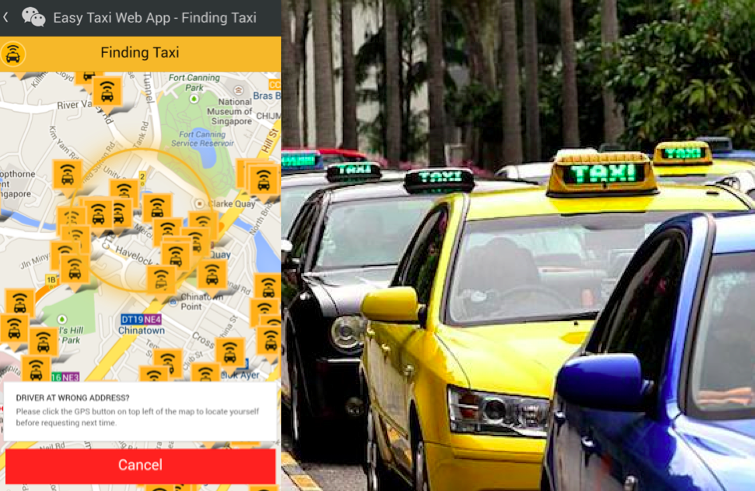
Weixin also introduced a cab reservation function called “Didi Taxi.” Users can book a taxi via Weixin payment. Cab services are a nice market in China and Weixin not only satisfies this niche, but also encourages users to pay via Weixin entrenching financial benefit to Tencent.
The major takeaway from the success of Weixin is that the product has become a part of consumers everyday routine and habit. Tencent does not track the time users spend on the service, but analysts believe it is more than other major blogging or social media services.
Social media marketers should be taking notes on Weixin and need to mirror Tencent’s initiatives.
Marketers, you need to know your audience, from tastes to interests and motivations. This is the first step towards a successful social media endeavor. Audiences are gaining power over their media use and it is important to conduct a thorough and accurate audience analysis before forging on any social media endeavor.
Aside from that, be sure your social media product becomes a part of your consumers “EVERYDAY ROUTINE AND HABIT.“
Thanks for reading!
References:
Barboza, D. (2014, January 20). A Popular Chinese Social Networking App Blazes Its Own Path. Retrieved from The New York Times: https://www.nytimes.com/2014/01/21/technology/a-chinese-social-network-blazes-its-own-path.html
Mahoney, L. M., & Tang, T. (2017). Strategic Social Media: From Marketing to Social Change. Malden: John Wiley & Sons, Inc.

Social media advancements have fueled some of the newest communication technologies. With the help of the internet, individuals and organizations now have the power to generate awareness and mobilize messages. Cyberactivism efforts help to spread media messages to enable faster and more effective communication and virality.
Every October we celebrate Breast Cancer Awareness month. This annual campaign increases awareness, educates and generates funds to help support research and support for those who are affected by the disease. Most individuals are empathetic to the cause and don’t mind participating in efforts to spread awareness.

Facebook has utilized mobilization through internet memes that create a fun way for individuals to spread awareness. One of the most popular memes in recent years used a private message request where females were asked to put a single color as their status update. The message asked females to choose a color that was the same as the bra they were wearing. The idea behind the message is that men will log onto Facebook and be confused by the bizarre single-color statuses posted by their female friends/followers. It’s a fun way to raise awareness to breast cancer while also generating viral attention.

The issue with Facebooks mobilization efforts was the focus on diffusion-centric campaigns. The memes, though fun, fail to spread tangible information regarding the initiatives and goals of the cause. A more opportunistic approach would be through the use of action-oriented mobilization efforts. Awareness-only techniques can be accomplished by a simple click of a button and will transform audiences into more interested, knowledgeable and vested advocates for a cause.
One viral campaign that is near and dear to me is Stand Up To Cancer (#SU2C). SU2C is an organization with a mission to end cancer as we know it. As someone who knows individuals affected by cancer, it feels good to know that there are efforts to raise awareness to this cause.

Those who know me, know I have a love and passion for the game of baseball. For the last decade Major League Baseball and its 30 clubs have donated more than $40 million to SU2C and have conducted significant awareness-building efforts through public service announcements, in-stadium promotions and various fundraising events.
This past season, Major League Baseball collaborated with SU2C to launch a PSA video titled “For All The Moments We Stand Up.” The campaign is advantageous as it creates an emotional experience which is one of the biggest indicators of mobilization success.
Social Media mobilization is ultimately one of the greatest advancements in modern communication. It maximizes the potential for strategy execution and makes it easier to engage with social audiences. The more social participation we can create, the more awareness we can generate to social causes. But it can’t stop at generating awareness, we need to ensure a tangible action is tied to these messages.
To learn more or to donate to the National Breast Cancer Foundation or Stand Up To Cancer, visit: https://www.nationalbreastcancer.org/breast-cancer-awareness-month or https://standuptocancer.org/what-we-do/awareness/
Refrences
Mahoney L., & Tang, T. (2016). Strategic social media: From marketing to social change. Marblehead, MA: Wiley.
National Breast Cancer Foundation, Inc. (2019). Breast Cancer Awareness Month. Retrieved from National Breast Cancer Foundation: https://www.nationalbreastcancer.org/breast-cancer-awareness-month
Stand Up To Cancer. (2019). Awareness. Retrieved from Stand Up To Cancer: https://standuptocancer.org/what-we-do/awareness/
Tolve, C. (2019, July 9). Major League Baseball teams up with Stand Up To Cancer to launch touching PSA. Retrieved from The Drum: https://www.thedrum.com/news/2019/07/09/major-league-baseball-teams-up-with-stand-up-cancer-launch-touching-psa

By: Cole Josselyn
I will begin by stating that I am not a customer of Warby Parker, nor was I familiar with their products or services prior to this post.
As someone with very little knowledge of the Warby Parker brand, I do find their business model to be rather inspiring. As the market changes and products become more available online, Warby Parker has been able to identify a niche that makes buying eyewear cheaper and more convenient. Through a small investment of $2500, the company launched by 4 University of Pennsylvania classmates created a business model that focuses on online distribution and challenges the old “showroom” narrative most consumers are accustomed to.
In a traditional media environment, the institute of change comes with many challenges. Warby Parker found a way to market their small business in a way that aligns with today’s consumers buying habits. Millennials shop online at a much higher rate and are constantly seeking out the best deals on products. Online sales allow companies to market to a higher volume audience and reduces the inconvenience of in store shopping.

The world today seeks to identify cheaper and more productive ways of selling and buying. The founders of Warby Parker identified this as an area of opportunity with a common product consumers use. Consumers have typically been required to visit the eye doctors, travel to showrooms and spend large amounts of money on prescription eyeglasses and sunglasses. Instead, Warby Parker decided to change this narrative. The business model developed by the company focuses on online distribution, increasing convenience and lowering the cost of glasses.
The challenge with this marketing technique is the commonality has always been to “try before you buy” and online sales aren’t always accommodating. Warby Parker identified this notion and consciously developed the “Home Try-On Campaign” to encourage transactional communication with its consumers.

The “Home Try-On Campaign” developed by Warby Parker allows consumers to order 5 pairs of glasses online, have them shipped to their home at no charge and decide on the pair that best suits them. Customers are encouraged to share their purchases on social media promoting the business and instilling trust in their audience. The campaign and social media communication reduces dissonance for consumers and enhances the business strategy set forth by the company.
In a world where 46% of online users turn to social media to make purchasing decisions, Warby Parker has taken advantage. The online distribution model makes purchasing eyewear easier and more accessible for consumers. Additionally, the company not only developed a cost saving method for eyewear purchasing, but also insisted on marketing for the greater good. By teaming up with VisionSpring, the company is able to provide glasses to those in need. For every pair of glasses sold by Warby Parker, a pair will be donated to someone in need. To date, 500,000 pairs of glasses have been donated. Wow!

Warby Parker has shaken the market through their use of social media technology and innovative marketing strategies. The brand has generated a blueprint for the market and has changed the old narrative of a traditional media environment.
I would encourage everyone in need to glasses or sunglasses to check this company out. Check them out here: https://www.warbyparker.com/
Thanks for reading. Check back soon for more content and postings!
This is an example post, originally published as part of Blogging University. Enroll in one of our ten programs, and start your blog right.
You’re going to publish a post today. Don’t worry about how your blog looks. Don’t worry if you haven’t given it a name yet, or you’re feeling overwhelmed. Just click the “New Post” button, and tell us why you’re here.
Why do this?
The post can be short or long, a personal intro to your life or a bloggy mission statement, a manifesto for the future or a simple outline of your the types of things you hope to publish.
To help you get started, here are a few questions:
You’re not locked into any of this; one of the wonderful things about blogs is how they constantly evolve as we learn, grow, and interact with one another — but it’s good to know where and why you started, and articulating your goals may just give you a few other post ideas.
Can’t think how to get started? Just write the first thing that pops into your head. Anne Lamott, author of a book on writing we love, says that you need to give yourself permission to write a “crappy first draft”. Anne makes a great point — just start writing, and worry about editing it later.
When you’re ready to publish, give your post three to five tags that describe your blog’s focus — writing, photography, fiction, parenting, food, cars, movies, sports, whatever. These tags will help others who care about your topics find you in the Reader. Make sure one of the tags is “zerotohero,” so other new bloggers can find you, too.

 Classroom Blogging MKT-555